Indoor Air Quality Study Completion in Philadelphia Childcare Facilities
Women for a Healthy Environment recently announced their report following an EPA-sponsored indoor air quality study of Philadelphia childcare facilities.


Women for a Healthy Environment recently announced their report following an EPA-sponsored indoor air quality study of Philadelphia childcare facilities.
The final PRCCEH virtual seminar of the Spring 2024 semester. Featuring, Kevin Osterhoudt, MD is a pediatrician, medical toxicologist and the Medical Director of The Poison Control Center at Children’s Hospital of Philadelphia.
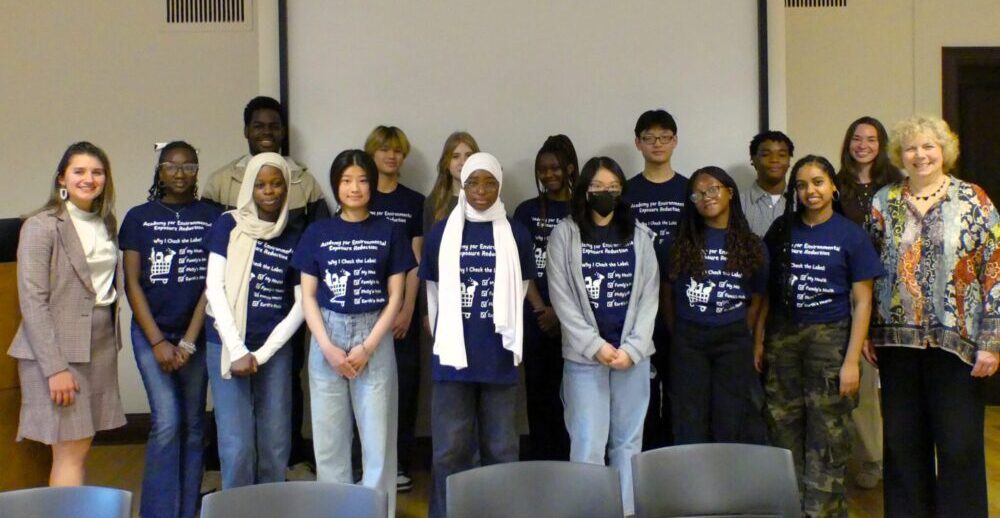
A look back at the 2024 Academy for Environmental Exposure Reduction by one of the student mentors, Colin Battis.
Center member and University of Pennsylvania faculty, Dr. Kathryn Hamilton won the Young Investigator Award in Basic Science by the American Gastroenterological Association.
With the addition of Siddhartha Roy, PhD, as our newest Center member, PRCCEH has officially reached the milestone of 10 institutional members.
As part of the University of Pennsylvania’s celebration of Earth Week 2024, this webinar features a panel discussion on the impact of lead exposure to people, wildlife and the environment.
New research by Dr. Sharon A. McGrath-Morrow, MBA, MD, PRCCEH member, and her team revealed new insights into the long-term effects of bronchopulmonary dysplasia.
The State of the Air 2024 report finds that despite decades of progress cleaning up air pollution, 39% of people living in America—131.2 million people—still live in places with failing grades for unhealthy levels of ozone or particle pollution.
From extreme heat to storms, pests, pollution, and more, our kids are feeling the effects of climate change.
EPA action designates two widely used PFAS as hazardous substances under the Superfund law, improving transparency and accountability to clean up PFAS contamination in communities
Vague terms on ingredient lists can conceal real hazards. That means the hard work of assessing product risk usually falls to everyday people.
The new restrictions will apply to over 200 facilities across the country. The EPA says they’ll cut cancer risk.
In a Q&A, Brianne Callahan, of the University of Pennsylvania Water Center explains the new regulations on PFAS, plus how they might affect consumer water bills, health, and more.
Penn Medicine researchers are adding to a growing body of evidence showing the many ways climate change touches human health.
Recognized for Discoveries in Gene Imprinting & Impact of Environmental Exposures on Pregnancy, Prenatal Development
This webinar overviews the Penn-CHOP ECHO program model, plans for the future, and how new methodological innovations and interventions will play a role in the ECHO cohort.
The Bureau of Family Health requests your voice to help identify the seven to ten priorities that will drive Pennsylvania’s Title V programs.
Take these steps to help eliminate allergy and asthma triggers. This article is part of a series on ShareCare featuring experts in children’s environmental health.
A historic year of U.S. billion-dollar weather and climate disasters; 2023 was the fifth-warmest year on record for the contiguous U.S.
Marisa S. Bartolomei, PhD, Perelman Professor of Cell and Developmental Biology, is the new Director of the Center for Women’s Health and Reproductive Medicine
Knowledge is safety. Learn how to protect yourself and loved ones from VOCs, BPA and benzene.
Recording of the February 2024 webinar by Dr. Daniel Jackson Smith on his research with farmworkers in South Georgia, particularly on heat health and extreme weather.
The President’s Task Force on Environmental Health Risks and Safety Risks to Children (Task Force) has published their priority activities for the next 5 years. Their priorities align with the focus areas of the PRCCEH.
Doctors are now being encouraged to consider more blood testing for PFAS, also known as “forever chemicals,” according to guidance released by the Centers for Disease Control and Prevention (CDC).