Study finds children’s health broadly declining in the U.S.
Using data from 2007 to 2023, researchers from Penn Medicine and CHOP found measures like mental health and obesity, as well as infant and child mortality rose.

Using data from 2007 to 2023, researchers from Penn Medicine and CHOP found measures like mental health and obesity, as well as infant and child mortality rose.
“Eco-nesting” is a growing trend that approaches nesting with a focus on avoiding the many everyday products that contain chemicals known to hurt babies’ and pregnant people’s health.
HUD published a notice modifying its elevated blood lead level (EBLL) threshold under its Lead Safe Housing Rule.
A new study by Thomas Jefferson University neuroscientist Jay Schneider, PhD, suggests that the toxic effects of lead can be mitigated by attentive maternal care and an enriched environment in an animal model.
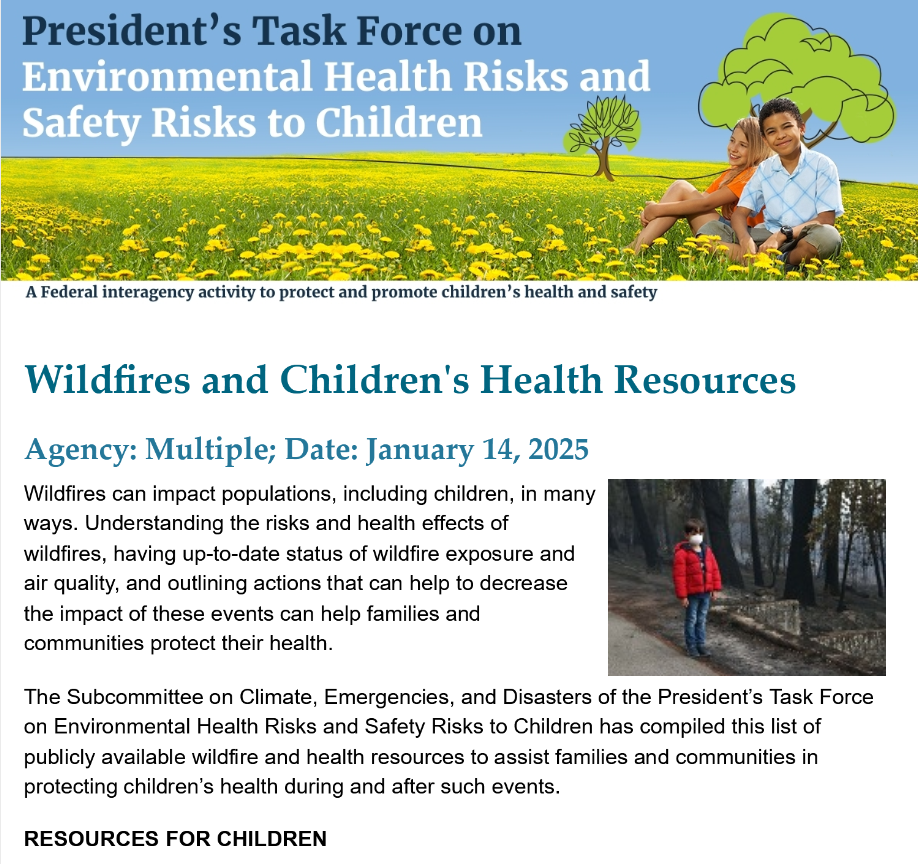
The President’s Task Force on Children’s Environmental Health and Safety recently released a this list of publicly available wildfire and health resources to assist families and communities in protecting children’s health during and after such events.
The Pennsylvania Department of Health (DOH) is alerting parents and caregivers about the U.S. Consumer Product Safety Commission’s recall of Yaomiao Children’s Jewelry Sets. Lead and cadmium levels that exceed federal safety standards have been found in the jewelry sets.
PRCCEH looks back at 2024!
How nurses at Penn are innovating public health care for a changing world.
Drs. Eugenia South and Atheendar Venkataramani teamed up to secure a nearly $10 million grant to study whether certain environmental and financial interventions in specific Philadelphia neighborhoods could move the needle on Black health disparities.
Center Co-Director Dr. Aimin Chen was featured in a Philadelphia Inquirer article focused on his new grant funding from NIH.
Marilyn Howarth, M.D., brings expertise in clinical medicine, communication engagement, and research translation to her work with the Center of Excellence in Environmental Toxicology at the University of Pennsylvania and the Philadelphia Regional Center for Children’s Environmental Health Center, both NIEHS-funded programs.
Whether you are hoping to rent or buy, know what to look for and what questions to ask.
Two PRCCEH experts share what environmental heath hazards mean for the health of our communities and what scientists and health care professionals are doing to help.
Temple University’s College of Public Health is leading a new NIH-funded study on how air pollution affects pediatric respiratory health across New York State
The Water Center is pleased to announce the release of a new report, Beyond Drinking Water: Strategies for Communicating and Managing PFAS Contamination.
By poring over decades worth of data, researchers hope to better determine how pesticides, metals, and exposures to other elements impact Alzheimer’s disease risk
The Philadelphia Water Department shared a public inventory of the city’s lead pipes. The material of service lines connecting hundreds of thousands of properties is unknown.
The Environmental Protection Agency is about to issue strict limits on lead dust, which poses a threat to millions of children across the United States.
More than 70% of homes in Pennsylvania are estimated to have been built before the 1978 lead paint ban, leaving many kids vulnerable to lead poisoning.
Thursday, October 10th, 2024 is the annual celebration of Children’s Environmental Health Day. The aim of CEH Day is to raise awareness to ignite local, regional and international action to […]
Two perspectives on the impact of PFAS on child development.. A Children’s Environmental Health Day webinar by the Philadelphia Regional Center for Children’s Environmental Health.
Whether from wildfires, pollution, or extreme heat, changes in air quality can have a profound impact on your mental health.
The FDA, EPA and the Dietary Guidelines for Americans recommend that pregnant people eat at least two to three servings (about eight to 12 ounces) of a variety of seafood a week to obtain the important nutrients that aid in the baby’s brain development.
Many U.S. families trust their tap water or believe they can fully control their private well. But do you know how contaminated your water may be?