
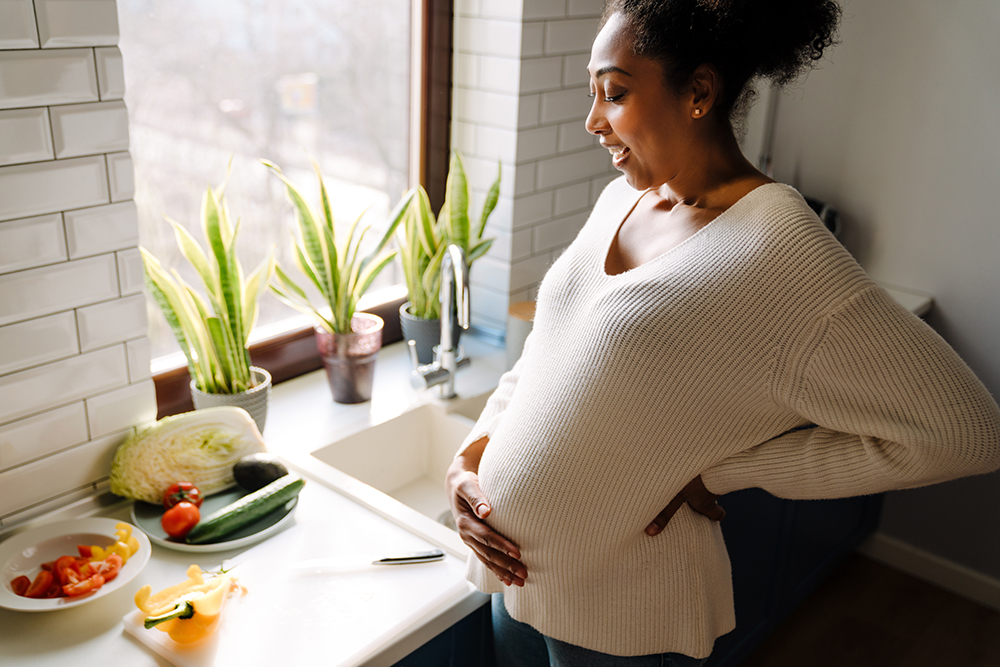
Nesting refers to the process of creating a safe, secure, and healthy space for your new baby. It also provides a moment to reexamine your environment and carefully look at the products that come into your home.
“Eco-nesting” is a growing trend that approaches nesting with a focus on avoiding the many everyday products that contain chemicals known to hurt babies’ and pregnant people’s health.
“During fetal development, there are a lot of changes in the growth of your child’s cells, organs, and even their genes,” says Sara Pinney, MD, MS, a pediatric endocrinologist with Children’s Hospital of Philadelphia and an Associate Professor of Pediatrics at the Perelman School of Medicine at the University of Pennsylvania in Philadelphia.
“They are being set up for the lifespan. And so, environmental exposures during this period can affect your baby for life,” says Dr. Pinney. “The same holds true for the early days and first years of life. These are critical windows of development.” That means it pays to be mindful of the materials that surround your child.
Read the full article on the Sharecare platform.
This article has been written in collaboration with the Center for Children’s Health Assessment, Research Translation, and Combating Environmental Racism (CHARTER) and the Region 4 Southeast Pediatric Environmental Health Specialty Unit (PEHSU) at Emory University.